Writing can be therapeutic
Presenting The Feeling of Cancer over the past few months to various groups, I always get asked if I have found writing the book therapeutic. The answer is a “yes”. In fact, it has been a very profoundly healing experience for me.
I never expected to write a book about myself, let alone my deepest, most honest emotional life. All my previous writing had been academic. It was a combination of things that led me to writing about myself and ultimately producing “The Feeling of Cancer”.
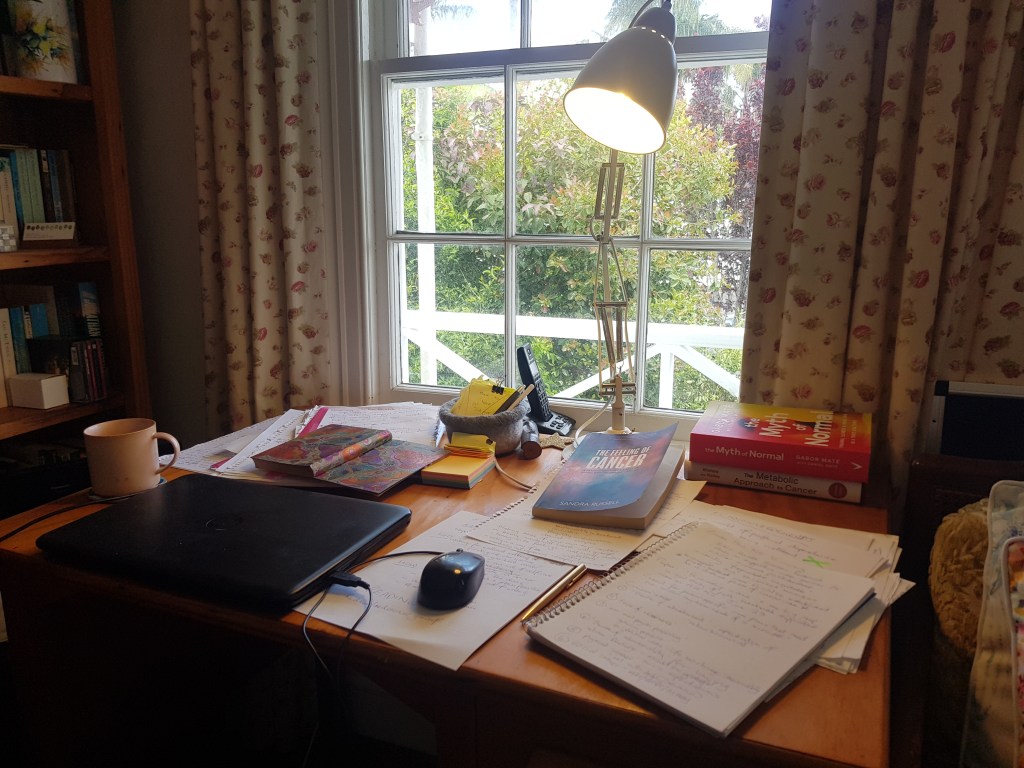
It all began with reading. After my devastating diagnosis of an incurable blood cancer, the emotional turmoil sent me searching for books to help me cope. I found that nothing I read helped me to understand the trauma, fear, anxiety and confusion that was swamping my days. Books on living with cancer and survivorship seemed to be focused on the relentlessly positive and didn’t reflect my own experience. I wondered why no-one was writing about the everyday reality of this changed life and I realised that it was because it was so painful and difficult to put into words.
In The Feeling of Cancer, I write extensively about how both meditation and gratitude courses helped me cope with my feelings at different times. Both of these expanded my awareness of the emotional impact of all the treatment and ongoing vulnerability I felt as I tried to manage day-to-day living. But it was on a short course in journalling at a hospice where I began to really explore the experience of writing for emotional wellbeing.
It feels important to DO something in the face of helplessness and when the journalling course came along, it was not long after all my months of treatment and first stem cell transplant. I felt not just helpless, but lost and adrift now I was reduced to three-monthly check-ups and had to figure out how to get on with life.
One session, I wrote a short paragraph and was asked to read it aloud to the small group. It had been a difficult day and we were asked to write about some of our feelings that morning. I don’t remember exactly what I wrote, but I do remember the effect of the words. I dug deep and was totally honest about my despair. When I heard my own words, something shifted inside of me. I remember my tears and seeing others being moved to tears. I felt relieved to have expressed something truthful that connected with the experience of others who were also struggling. I began to write at home.

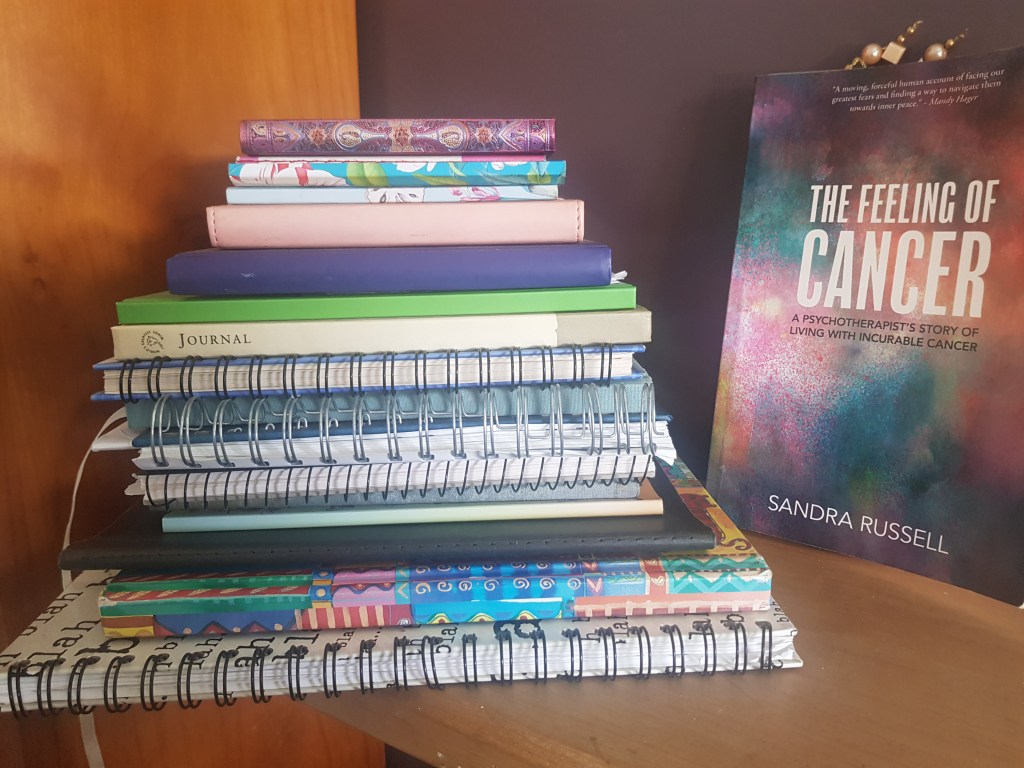
At first my writing was in fragments, not surprising as I felt so fragmented myself – in pieces. My notebooks (above) are full of single words and short phrases that seemed to come to me, often in the middle of the night when I was most confronted by my feelings.
As time went on, I began to realise that my scrappy notes were forming into a story. When I presented my “patient story” to a hospice training day and some suggested I write a book. The seed was planted and I began in earnest shaping the story into a meaningful whole.
Writing for emotional wellbeing
Writing can give you access to those locked away, fragile and awful feelings that the cancer experience can bring. Everything I’ve said in my previous BLOG about the importance of putting your feelings into words stands here.
Writing can be:
an anchor during difficult times
You can write for others to read, but writing for yourself, at least initially, can help with your emotional wellbeing. Jotting down your deepest feelings (use a “feeling wheel” such as the one in my BLOG on emotions is a good way to both explore and expand your understanding of your feelings.
a way of remembering
We may only want to forget, but my experience as a psychotherapist has taught me that traumatic events exert emotional pressure on us over time when we use energy to push them away. Other than talking through these experiences, writing about them can be a way to bring them to the fore in a safe way. It is often painful to revisit such experiences, but I have found it to be ultimately healing to write about your anger, fear, anxiety and vulnerability, as well as the funny and joyous moments.
a way of reclaiming and rediscovering yourself
Exploring your personal truth and making your own sense of things is a powerful act of reclaiming your identity. Writing can help you find how cancer has changed you and your approach to life. This, in turn, helps you to think who you would like to be. You can grow as a person from writing by reclaiming and rediscovering yourself.
How to write freely
Despite having a background of writing for my career and then, of course, the book, I still find writing quite challenging. What I struggle with is finding exactly what I want to say, and so I’ve become used to writing just “anything” to get started, then going from there. I have a strong self-critic. Beware, as I say below.
Write whatever you like, when you like, on whatever you like. I have a huge drawing pad I like to scrawl on as well as tiny notebooks.
Self-criticism kills free writing. Don’t judge it.
Start small. Explore one experience, for example the moment you were given your diagnosis. Use all your senses and a thesaurus. Meditate, listen to music, go for a walk, anything that you find increases your self-awareness.
Do a little, go back, or don’t. Throw it away if you like. It’s yours to do whatever with. If you use your phone or computer, make sure you can keep it private.
Buy a lovely notebook and pen and carry them with you. You’d be surprised when things you want to note down pop into your head.
Write somewhere outside home. I like to write in cafes, at the beach or the park. Being away from your usual environment can help you access different feelings.
Write the events but try to put the feelings in. You will know when you get it right by reading it out to yourself (or someone else if you feel you want to). You should be able to feel the feelings inside. The writing comes alive when your feelings are present. Writing in the first person – I felt exhausted, then I tried to sleep etc…. can really help.
 thefeelingofcancer.com