
The quotations in The Feeling of Cancer are from books which hold some personal meaning for me. I explain further my connection to each of these books below.
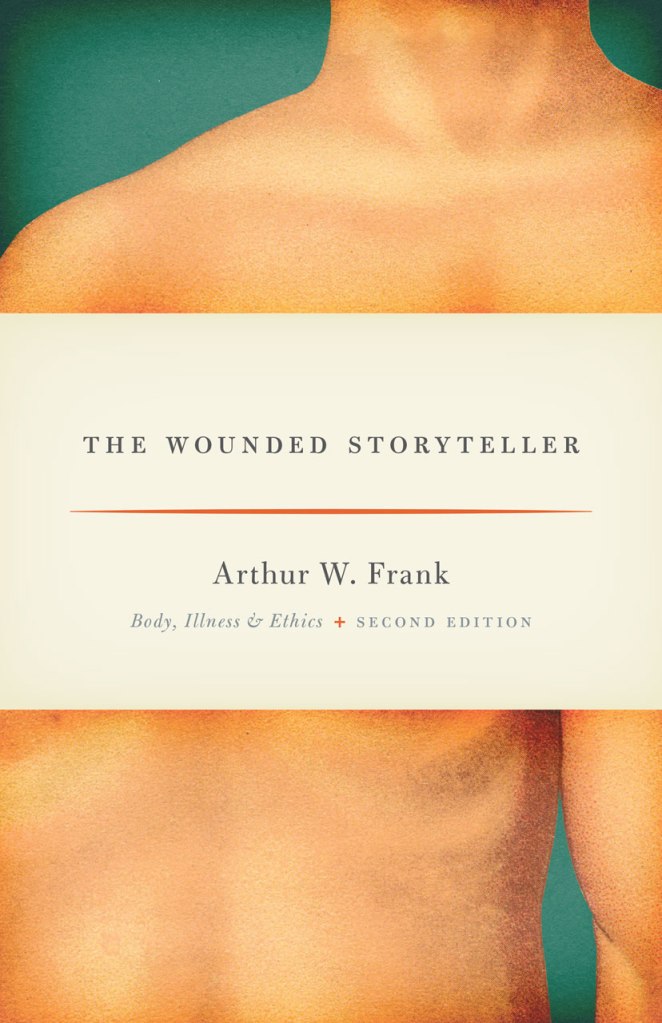
The Wounded Storyteller: body, illness and ethics
Copyright © 2013 (2nd ed.) by A. W. Frank
Reprinted with permission of University of Chicago Press
“In both listening to others and telling our own stories, we become who we are.”
Frank’s ideas have had a profound influence on my writing. He is a distinguished American medical sociologist and narrative theorist who is concerned with the dehumanizing effects and stigma of being a patient. In his two books, At the Will of the Body and The Wounded Storyteller: Body, Illness and Ethics (2013) he sets out his belief that illness narratives have the power to reclaim the experience of illness from the biomedical narrative shaped around medical definitions of wellness, illness, recovery and death. He encourages those writing about living with illness to be honest and truthful in their writing and not preoccupied with the medical system within which the ill inevitably become subsumed.
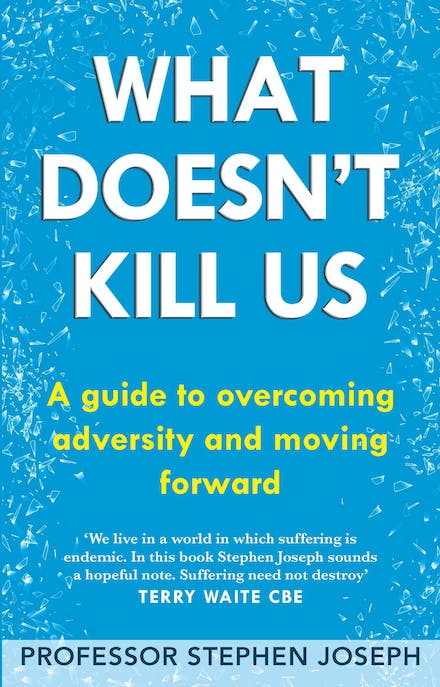
What Doesn’t Kill Us: a guide to overcoming adversity and moving forward
Copyright © 2012 by S. Joseph
Reprinted with permission of Little Brown Book Company Ltd
“However, trauma is not an illness to be cured by a doctor. Certainly, therapists can offer people guidance and be expert companions along the way, but, ultimately, people must be able to take responsibility for their own recovery and for the meaning that they give to their experiences.”
There is a growing understanding that both being diagnosed with cancer and the treatment itself can cause post-traumatic stress. British Professor of Psychology Stephen Joseph has extensive experience of working with and researching post-traumatic stress and this book challenged the narrow range of events considered traumatic at the time to include such things as a cancer diagnosis. Joseph’s view is a hopeful one and looks at how some people are able to manage their feelings and find new purpose in their lives following trauma.
Since this book was written, Joseph has a website full of resources based around his research and publications. His books address the different kinds of therapeutic interventions and he casts a wide net in his thinking, documenting how psychological and social structures in the modern world can exacerbate traumatic experiences and prevent recovery.
In a later publication on post traumatic growth. He makes it clear that he thinks that life is more complex than that adversity always makes people stronger and that any post traumatic growth may well be at a devastating cost and so I feel he’s certainly shifted his thinking over time from the nietzschean view that “What doesn’t kill us makes us stronger” that he references in his book title.
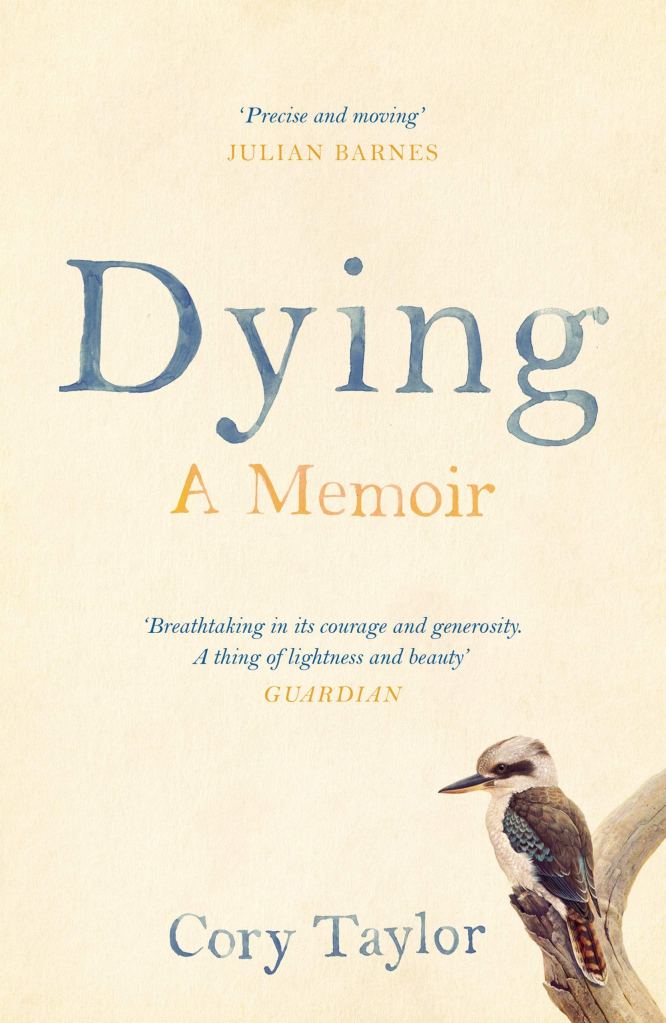
Dying: A Memoir
Copyright © 2016 by Cory Taylor
Reprinted with permission of The Text Publishing Company
“I have heard it said that modern dying means dying more, dying over longer periods, enduring more uncertainty, subjecting ourselves and our families to more disappointments and despair. As we are enabled to live longer, we are also condemned to die longer.“
When I first read Australian writer Cory Taylor’s book I was deeply affected by her honesty and openness as she wrote during the last few months of her life, knowing she had little time left. She had lived with cancer for 10 years, working as a screenwriter and novelist, but her final book was about dying and dying well, about having those difficult conversations about death, “the monstrous silence” as she called it. Taylor’s narrative style and courage in mentioning the unmentionable influenced my writing as I searched for ways to write about my reality.

On Balance
Copyright © 2010 by A. Phillips
Reprinted with permission of Penguin Books Ltd
“We don’t have relationships to get our needs met, we have relationships to discover what our needs might be.“
I wanted to include a quotation from Adam Phillips, a well-published British psychoanalyst, as I’m a fan. He writes beautifully about his work, his understanding of people and the way they manage in the world. He’s written many articles, essays and books and I’ve read most of them as his writing is always enchanting. I feel that the playfulness and inventiveness of his writing reflects his many years of working with children. He has said that he views psychoanalysis as a kind of “practical poetry”. In this book Phillips questions the whole idea that achieving balance in life is worthwhile which I think is interesting for those of us with cancer to consider.

Mindfulness-Based Cancer Recovery: a step-by-step MBSR approach to help you cope with treatment & reclaim your life
Copyright © 2011 by L. E. Carlson & M. P. Speca
Reprinted with permission of New Harbinger Publishing
“It seems to be the case that if you can be present for your life as it actually occurs, much of the angst of the past and future simply falls away. It may seem hard to believe, but this is possible even in the midst of a life crisis like cancer.”
This workbook is a great start to exploring your own experience. It’s a well-researched series of activities that can help you better understand what you are going through at an emotional level and is the sort of thing you can dip into.
Linda Carlson, one of the authors, has a very good TED TALK which outlines the benefits of developing a mindfulness practice. She explains that whilst all the media focus on their Mindfulness-Based Cancer Recovery has been on the improvements that can be measured in the body, including the immune system, which she summarizes in her talk, she thinks the most important finding of their research is that “it makes people feel better”.
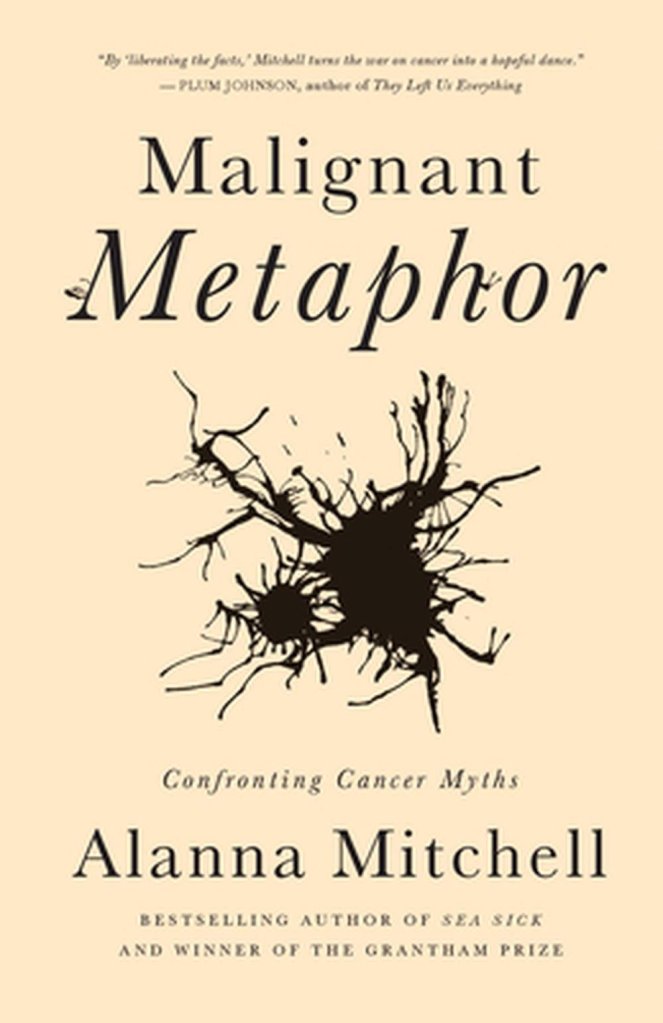
Malignant Metaphor: confronting cancer myths: a memoir.
ISBN 978-1-77041-389-4
Copyright © 2015 by A. Mitchell
Reprinted with permission from ECW Press
“I wonder what it would feel like if cancer were a dance…What would it feel like then? The person with cancer would be a dancer, creating art and maybe beauty and maybe life. Dances take different forms. Some are anarchic. Some dissonant. Some disruptive. Others balletic and gentle and athletic. But they are always radically personal. It’s hard to feel polluted when you dance. Hard to feel as though your very self has been erased.”
Canadian science writer Alanna Mitchell unpacks the way understandable fear and dread of cancer in society are intensified by the use of language and cultural references. She looks closely at misconceptions about cancer and how they are perpetuated. This is all woven through the story of her brother-in-law’s cancer diagnosis and treatment. It is a very personal and readable book that does a great job of sorting fact from fiction.

When things fall apart: heart advice for difficult times.
Copyright © 1997 by Pema Chӧdrӧn,
Reprinted with permission from Shambhala Publications
“Things falling apart is a kind of testing and also a kind of healing.
We think that the point is to pass the test or to overcome the problem, the truth is that things don’t really get resolved. They come together and they fall apart. Then they come together again and fall apart again. It’s just like that. The healing comes from letting there be room for all of this to happen: room for grief, for relief, for misery, for joy.”
“Impermanence is a principle of harmony. When we don’t struggle against it, we are in harmony with reality.“
This book was suggested to me by my teacher on a Buddhist retreat, which I write about in The Feeling of Cancer and is full of wisdom. Amongst the stories of the devastating experiences of others, Pema writes about her own world falling apart when her marriage broke up suddenly and this presented her with a spiritual challenge which led her to Buddhism. With its focus on using painful feelings to encourage compassion and courage, it came along just at the right time for me, when I had the space over 14 days to consider the teachings in relation to my own life.

“Breath” from Gleam
Copyright © 2013 by Sarah Broom
Printed with permission from Auckland University Press
“I am trying to breathe
like the slow, low purr of a drowsy cat
like the languid sway of an empty swing
like the shiver of a thistle in the wind
like someone about to stop breathing entirely
I look for that place
where breath becomes so light it vanishes,
pulls away like a small place turning steeply
and heading up, straight up,
fishbone thin in a thin blue sky
then gone.”
New Zealand poet Sarah Broom wrote this collection of poetry at the age of 44, when she knew she was dying from lung cancer. The poems are infused with imagery from the natural world, graceful and slight, with mortality at the core.
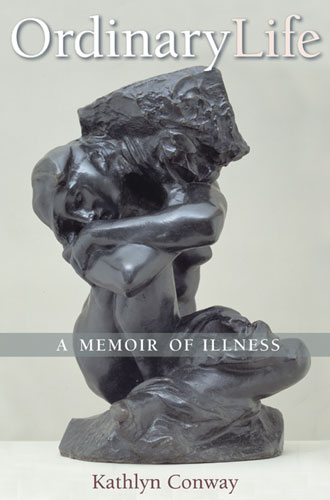
Ordinary Life: a memoir of illness.
Copyright © 1997 by K. Conway
Reprinted with permission from W. H. Freeman and Company
“For me, hearing the diagnosis of cancer meant entering a closed circle inside of which I was separated from my ordinary life, my ordinary self, from the very people I loved. Inside that circle I felt like a creature from a different species or, more accurately, one of the possessed characters in Invasion of the Body Snatchers. I looked the same, at least for a time, but my spirit had been taken away.”
American psychotherapist Kathlyn Conway writes about the damage to herself and her life brought about by a breast cancer diagnosis. She chronicles the misery and turmoil thrust upon her world after her diagnosis, and the longer-term psychological damage she feels. Conway rails against the “narrative of triumph” dominant in 90s America, rejecting the idea that she might be engaged in an heroic battle, preferring to show the devastation of the experience.
Staring at the Sun: overcoming the terror of death.
Copyright © 2011 by I. Yalom
Reprinted with permission from Little Brown Book Group Ltd
“Our existence is forever shadowed by the knowledge that we will grow, blossom, and, inevitably, diminish and die.”
Irvin Yalom is an eminent American psychiatrist who practices existential psychotherapy. This approach involves amongst other things helping his patients to find meaning in their lives. In this book, a psychotherapy classic, Yalom documents several case studies and also talks about his own feelings around his own death. He also explores his belief that much of our human anxiety has a fear of death at its root.
Man’s Search for Meaning by Viktor E. Frankl
Copyright © 1959, 1962, 1984, 1992 by Viktor E. Frankl
Reprinted with permission from Beacon Press
“If there is a meaning in life at all, then there must be a meaning in suffering. Suffering is an ineradicable part of life, even as fate and death. Without suffering and death, human life cannot be complete.“
Frankl’s book, another classic, was written after he survived the concentration camps in WWII and has sold over 16 million copies. Drawing on his experience of the Holocaust and his observation of others, Austrian psychiatrist Frankl suggests that there are three ways one can find meaning: through work, through love and through suffering. He develops his theories into a form of therapy called logotherapy. In The Feeling of Cancer I chronical my experience of a course I was part of on “gratitude” which was based on the principles of logotherapy.

How to Stay Sane
Copyright © 2012 Philippa Perry
Reprinted with permission from Pan Macmillan
“Part of staying sane is knowing what our story is and rewriting it when we need to.”
UK psychotherapist Phillipa Perry has done much to demystify psychotherapy in her regular columns in the Guardian newspaper over the years and in her graphic novel about the psychotherapy process Couch Fiction. Skilled and wise, she is a very accessible writer and her small book How to Stay Sane published by The School of Life, is a pocket guide to understanding how the stresses of modern life affect us and how we might approach them through better self-understanding. The School of Life, overseen by founder philosopher Alain de Botton, has a great series of books and articles on different topics about managing in the modern world. Here is Philippa talking about the book.

Imitations: Six Essays
Copyright © 2020 by Zadie Smith
Reprinted with permission from Penguin Random House
“Suffering is not relative; it is absolute. Suffering has an absolute relation to the suffering individual.“
These essays are British author Zadie Smith’s response to the early days of the pandemic and lockdown in New York and London. She captures the strangeness of events and fragmentation of communities through her acute observations of herself and those around her beautifully.
 thefeelingofcancer.com