
The question I asked myself was how can I be emotionally well in the face of a life-limiting illness and all that this brings?
The Feeling of Cancer was written as a way of answering this question. My memoir is informed by the psychotherapeutic belief that the integration of traumatic and stressful emotions through the creation of a meaningful story can be a profoundly emotionally restorative, and hence healing, experience.
To write about the individual experience of living with cancer is common, but to foreground the internal emotional states and conflicts throughout is not.
The Feeling of Cancer was a direct response to my reading after I was diagnosed with cancer. I searched for books that could help me with the emotional distress I was experiencing after my diagnosis and both during and after treatment. Whilst the emotional toll and stress were often mentioned in passing, books about living with cancer were usually preoccupied with what I think of as “the medical narrative”, by which I mean they were concerned with the details of disease and treatment and the involvement with the medical system and made little mention of the effects on the self. I wanted to know how people were feeling; how they were coping or not coping. I desperately needed stories of the self during illness as nourishment, to feel less alone and to help me understand my own feelings, to support my own emotional wellbeing.
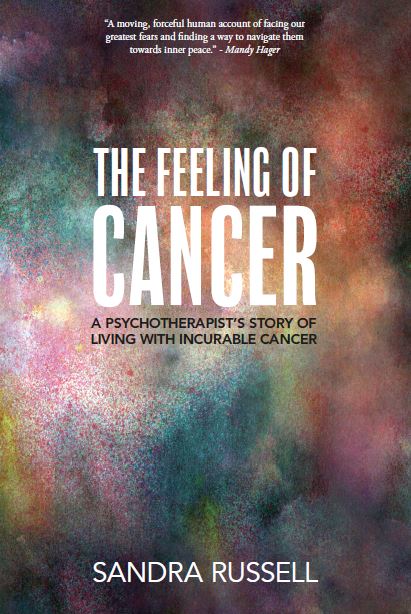
A better understanding of the very human situation of life with cancer.
A large part of my purpose in writing has been to widen our understanding of what it means to live with cancer, in the hope of resonating with those who are going through similar experiences. We all need a mirror, a touchstone, in times of great personal challenge. The foundation of The Feeling of Cancer is that emotional awareness and understanding are at the heart of emotional wellbeing. Honesty and truth can offer hope.
I believe that as a psychotherapist I might be in a position to articulate the often-unspoken feelings.
I am used to the devaluation of feelings in our society. It’s what I was up against every day in my psychotherapy practice. There are still barriers to be broken both in revealing emotional depth and being able to put words to it in general. In the case of illness, shame and stigma can get in the way of connecting with the real feelings. So I understand how emotional stress is difficult to be open about and express authentically. The feelings stay unacknowledged, submerged, to be dealt with alone.
 thefeelingofcancer.com